
Surface Area Calculator
Use the calculators below to calculate the surface area of several common shapes.
Ball Surface Area
 |
Cone Surface Area
 |
Cube Surface Area
 |
Cylindrical Tank Surface Area
 |
Rectangular Tank Surface Area
 |
Capsule Surface Area
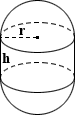 |
Cap Surface Area
Please provide any two values below to calculate.
 |
Conical Frustum Surface Area
 |
Ellipsoid Surface Area
 |
Square Pyramid Surface Area
 |
TL;DR
Use the surface area calculator to eliminate manual integration errors, but recognize that geometric formulas assume idealized shapes that rarely exist in physical materials. Input your dimensions carefully, prioritizing unit consistency over decimal precision, as conversion errors outweigh rounding differences by an order of magnitude. Treat the output as a theoretical baseline rather than an absolute physical measurement.
The Geometry Assumption Trap
Most users operate under the false assumption that surface area is a fixed, intrinsic property of an object. In reality, measured surface area depends entirely on the scale of observation. This is known qualitatively in mathematics as the coastline paradox: as your measurement resolution increases, the perceived surface area of a rough object increases without bound. A standard surface area calculator utilizes Euclidean geometry, which assumes smooth, continuous boundaries. If you apply these formulas to porous materials, fractal structures, or rough-machined parts, the result will systematically underestimate the true exposed area.
This discrepancy creates a critical trade-off between computational simplicity and physical accuracy. If you choose a standard geometric formula, you gain speed and reproducibility but lose fidelity to the material’s microstructure. For engineering applications like heat exchange or chemical reactions, where surface contact drives performance, this loss matters far more than minor decimal rounding. A smooth sphere calculation might yield 100 square units, but the actual textured surface could exceed 150 square units depending on roughness parameters. You must decide if the calculator’s idealized output serves your tolerance requirements.
To mitigate this, classify your object before calculation. Use the table below to match your physical object to the closest geometric primitive. Deviations from these shapes introduce error margins that the calculator cannot account for automatically.
| Geometric Primitive | Ideal Use Case | Error Source |
|---|---|---|
| Sphere | Tanks, planets, bearings | Surface texture, valve protrusions |
| Cylinder | Pipes, columns, wires | End caps, curvature imperfections |
| Rectangular Prism | Boxes, rooms, containers | Corner rounding, wall thickness |
| Cone | Funnels, roofs, towers | Truncated tips, base irregularities |
Selecting the wrong primitive is a common failure mode. A silo is not a perfect cylinder; it often has a conical bottom. Calculating it as a cylinder ignores the hopper section, leading to material estimation errors. Always decompose complex objects into sums of simpler primitives. Calculate each section separately and sum the results. This manual segmentation reduces the asymmetry between the model and reality.
Precision Protocols and Unit Hygiene
Calculation errors rarely stem from the formula itself; they originate from input hygiene. Unit inconsistency is the primary driver of catastrophic failure in surface area computation. Mixing metric and imperial units, or failing to convert linear dimensions to square units correctly, produces results that are off by factors of 144 or 10,000. The calculator handles the arithmetic, but it cannot infer your intent if you input centimeters when the field expects meters. This human-element variance is significantly more dangerous than algorithmic precision limits.
When entering data, adhere to a strict single-unit protocol. Convert all inputs to a base unit before calculation. If you measure length in inches and width in feet, convert the feet to inches first. Do not rely on the calculator to perform mixed-unit algebra unless explicitly designed for it. The asymmetry here is clear: spending thirty seconds on conversion prevents errors that require complete recalculation later. Precision in the third decimal place is useless if the magnitude is wrong due to unit mismatch.
EX: Hypothetical Walkthrough
Consider a hypothetical storage tank requiring coating. You need the external surface area. 1. Identify Shape: Cylinder with flat ends. 2. Measure: Radius (r) = 50 cm, Height (h) = 200 cm. 3. Check Units: Both are in cm. No conversion needed. 4. Formula: A = 2πr(r + h). 5. Calculate: * r + h = 250 cm * 2πr ≈ 314.16 cm * A ≈ 314.16 × 250 = 78, 540 cm² 6. Convert Output: To get square meters, divide by 10,000. * A = 7.854 m²
In this example, if you had measured height in meters (2 m) and radius in centimeters (50 cm) without converting, the calculator might process them as raw numbers depending on its logic, yielding a nonsensical result. If the tool assumes consistent units, it would calculate 2π(50)(50 + 2), treating the 2 as centimeters, resulting in a massive underestimation. Always normalize inputs.
Sensitivity to outliers also applies here. A single misread digit in the radius affects the result quadratically because r appears twice in the cylinder formula (r2 and rh). A 1% error in radius creates roughly a 2% error in total area. Height errors are linear. Therefore, measure the radius with higher precision than the height. Allocate your measurement effort where the mathematical sensitivity is highest.
Final Decision Protocol
Stop treating the calculator output as an absolute truth. After reading this, you should verify your geometric assumption before trusting the number. If the object deviates from the ideal shape by more than 5%, decompose it into multiple primitives and sum the areas manually. This extra step costs time but prevents the systemic underestimation that occurs when forcing complex reality into simple formulas.